What is an example of pastoral nomadism?
 James Craig
.
Also asked, what is a pastoral nomadism?
Pastoral Nomadism is a form of subsistence agriculture (farming to eat) based on the herding of domesticated animals. The word pastoral means sheep herding.
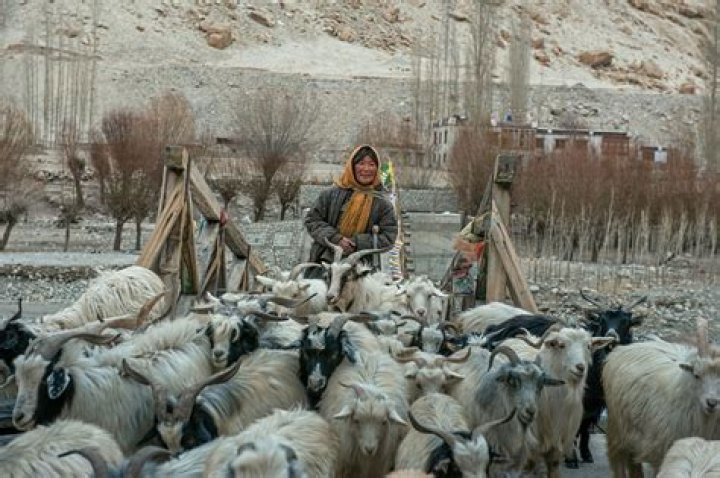
Also Know, what is an example of a pastoral society? A pastoral society is a nomadic group of people who travel with a herd of domesticated animals, which they rely on for food. The types of livestock used in pastoral societies are all herding herbivores, such as sheep, buffalo, camels, reindeer, goats, or cattle.
In this way, what is an example of pastoralism?
Pastoralism is a form of animal husbandry, historically by nomadic people who moved with their herds. The species involved include various herding livestock, including cattle, camels, goats, yaks, llamas, reindeer, horses and sheep. Pastoral communities have different levels of mobility.
What is pastoral nomadism and where is it practiced?
Nomadic pastoralism is a form of pastoralism when livestock are herded in order to find fresh pastures on which to graze. Nomadic pastoralism is commonly practised in regions with little arable land, typically in the developing world, especially in the steppe lands north of the agricultural zone of Eurasia.
Related Question Answers
How does pastoral nomadism work?
nomadism. Pastoral nomads, who depend on domesticated livestock, migrate in an established territory to find pasturage for their animals. Most groups have focal sites that they occupy for considerable periods of the year. Pastoralists may depend entirely on their herds or may also hunt or gather,…What are the characteristics of a pastoral society?
The Pastoral Way of Life:A pastoral society is made up of pastoralists; people whose lives center on tending the land and caring for herds of animals such as sheep, goats, yaks, camels, or cattle, on which they depend for food and sustenance.Is pastoral nomadism developed?
Pastoralism refers to a stage in the development of civilization between hunting and agriculture and also to a way of life dependent on the herding of livestock, specifically, ungulates.What is pastoral culture?
bibliography. Pastoralism is an economic activity involving the care of herds of domesticated livestock. In its traditional forms it is either practiced as the main mode of subsistence or combined with agriculture. Pastoralism functions as a cultural system with a characteristic ecology.What is an example of transhumance?
Transhumance is a type of pastoralism or nomadism, a seasonal movement of livestock between fixed summer and winter pastures. It is often important to pastoralist societies, as the dairy products of transhumance flocks and herds (milk, butter, yogurt and cheese) may form much of the diet of such populations.Where is pastoral nomadism practiced today?
A modern form of pastoralism is practiced by cattle and sheep ranchers in Western North America, Australia, New Zealand, Argentina, and a few other areas of the world. However, these ranchers are not subsistence pastoralists.How does pastoral nomadism affect the environment?
The grazing and overgrazing of fields and farm lands by ruminant herds leads to vegetation depletion, tearing (in part) and hardening of farm/non-farm top soils, erosion and flooding, destruction of food and economic crops, loss of biodiversity and a host of other adverse environmental effects.How do you use pastoral in a sentence?
Examples of pastoral in a SentenceAdjective The house is situated in a charming pastoral setting. Her favorite painting in the collection is a pastoral landscape. The bishop outlined the church's views in a pastoral letter.What is a pastoral lifestyle?
A pastoral lifestyle (see pastoralism) is that of shepherds herding livestock around open areas of land according to seasons and the changing availability of water and pasture. It lends its name to a genre of literature, art, and music that depicts such life in an idealized manner, typically for urban audiences.What are pastoral resources?
pastoral resources are those resources which are obtained from animals such as milk, wool etc.What are the types of pastoral farming?
There are two main types of pastoral farming: intensive pastoral farming and extensive pastoral farming. Intensive farms generally take up a fairly small area of land, but aim to have a very high output, through massive inputs of capital and labour.What do pastoralists do?
Pastoralism is the branch of agriculture concerned with the raising of livestock. It is animal husbandry: the care, tending and use of animals such as camels, goats, cattle, yaks, llamas, and sheep. Pastoralists may also use fire to make ecosystems more suitable for their food animals.How do pastoral nomads live?
Normally pastoral nomads flourish in mountainous or hilly regions. These areas are covered with grasslands, forests, shrubs etc. giving them pastures for their cattle to sustain and survive. Such areas also have a more ideal climate and temperatures for cattle like sheep and goats.What are the types of society?
Sociologists have classified the different types of societies into six categories, each of which possesses their own unique characteristics:- Hunting and gathering societies.
- Pastoral societies.
- Horticultural societies.
- Agricultural societies.
- Industrial societies.
- Post-industrial societies.