What happens when you mix chlorine?
 James Craig
 .
Also question is, what happens when you mix gas and chlorine?
In addition to respiratory irritation, hydrazine canalso cause edema, headache, nausea, and seizures. Mixingbleach and ammonia also produces chlorine gas, which hasbeen used as a chemical weapon. Two common ways to accidentallymix these chemicals include: Mixing cleaning products(generally a bad idea)
Secondly, what happens when you mix chlorine and ammonia? Sodium hypochlorite is the active ingredient inchlorine bleaches. Now, gaseous chlorine reacts withthe ammonia (present in another cleaning product) to formchloramine vapors. If ammonia is present in higher amounts,then toxic liquid hydrazine may be formed, which can boil and sprayhot toxic liquid.
Subsequently, one may also ask, what should you not mix with chlorine?
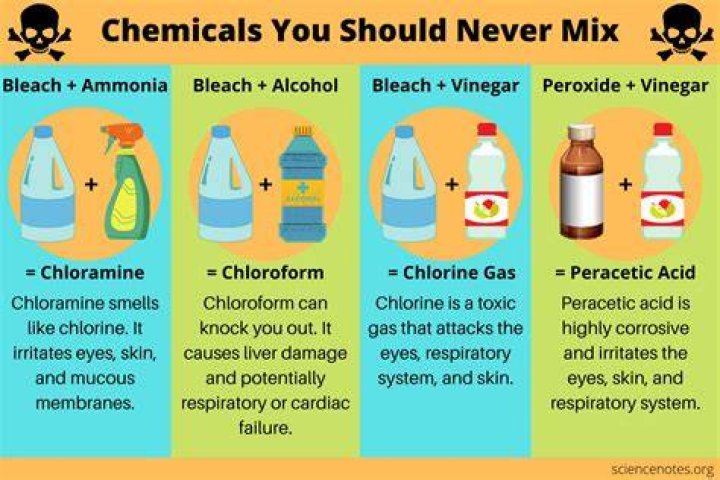
- Bleach + Vinegar = Toxic Chlorine Gas.
- Ammonia + Bleach = Toxic Chloramine Vapors.
- Rubbing Alcohol + Bleach = Chloroform.
- Hydrogen Peroxide + Vinegar = Parecetic Acid.
- Baking Soda + Vinegar = Ineffective Cleaning Solution.
- Two Different Battery Brands = Corrosion.
- Medicine + Grapefruit Juice = Adverse Effects.
Can ammonia and bleach kill you?
Ammonia and bleach: This combination isdangerous, producing vapors that can cause severe damage toyour respiratory system. Vinegar and bleach: If youadd a weak acid to bleach, it creates vapors of toxicchloramine and chlorine. These vapors can cause seriouschemical burns to your eyes and lungs.
Related Question Answers
How long does chlorine gas take to dissipate?
When treated effluent is released into receiving waters,free residual chlorine dissipates rapidly (it has ahalf-life of 1.3 to 5 hours).Will bleach destroy an engine?
Bleach might not have many disastrous effects inthe short term, but it's utterly devastating in the long term.Being a corrosive oxidizer mixed with water, bleach cancause any kind of metal component to rust and fall apart thousandsof times faster than it normally would.What will happen if you put antifreeze in a gas tank?
What happens if someone puts antifreeze inyour gas tank? if antifreeze is put in thegas tank and the engine run with it in there, it willdamage the fuel pump, fuel filter, and thefuel injectors, requiring their replacement.How does chlorine gas kill you?
Health dangers. But chlorine itself is veryreactive with the human body and very toxic. It irritates the eyesand skin and, even at quite low levels, can causes permanentlung damage even if it does not kill you. Breathinghigh levels of chlorine causes pulmonary oedema—fluidbuildup in the lungs.How do you get rid of toxic chlorine gas?
How chlorine exposure is treated. No antidoteexists for chlorine exposure. Treatment consists ofremoving the chlorine from the body as soon aspossible and providing supportive medical care such as inhaledbreathing treatments for wheezing in a hospitalsetting.What happens if you accidentally mix bleach and vinegar?
So when bleach is mixed with vinegar, thesodium hypochlorite takes a proton from the vinegar, andthat reaction generates hypochlorous acid. “This iswhy bleach is so good at removing stains,” sheexplains. When the chlorine atom in the hypochlorous acidtakes electrons from the vinegar, chlorine gas isformed.Can you mix bleach and vinegar?
Although bleach is a strong disinfectant, andvinegar dissolves mineral deposits and kills many types ofmold, fungi and bacteria, combining the two can bedangerous. Mixing bleach with an acid such as vinegarcreates chlorine gas, a toxic chemical that can be deadly athigh levels.What happens if you mix acetone and bleach?
You may be aware household bleach givesoff dangerous fumes when mixed with bases, such as ammonia,and acids, such as vinegar, but did you know it's also riskyto mix it with alcohol or acetone? Bleachreacts with alcohol or acetone to form chloroform, achemical that could knock you out and cause organdamage.What is the most dangerous household chemical?
5 Most Dangerous Household Chemicals- Ammonia. Ammonia fumes are a powerful irritant, potentiallyharming your skin, eyes, nose, lungs and throat.
- Bleach. Another useful but dangerous cleaner, bleach also hasstrong corrosive properties that can do serious damage to the humanbody.
- Antifreeze.
- Drain Cleaners.
- Air Fresheners.
What are two chemicals that explode when mixed?
What two chemicals, when mixed, makes anexplosion? Hydrogen and oxygen is pretty explosive,especially at 1800 psi and 800 degrees.What chemicals should you never mix?
Chemicals You Should Never Mix- Bleach + Ammonia = Toxic Chloramine Vapor. Doug Armand, GettyImages.
- Bleach + Rubbing Alcohol = Toxic Chloroform. Ben Mills.
- Bleach + Vinegar = Toxic Chlorine Gas.
- Vinegar + Peroxide = Peracetic Acid.
- Peroxide + Henna Hair Dye = Hair Nightmare.
- Baking Soda + Vinegar = Mostly Water.
- AHA/Glycolic Acid + Retinol = Waste of $$$
Can you mix bleach and Dawn?
It's never, ever safe to mix dish soap withbleach. Check the dish soap label - if it contains anyammonia-derived compounds, it will say “Do notmix with bleach.” Bleach + ammoniacreates very bad gases.Can I mix bleach and baking soda?
Is It Safe to Mix Bleach and Baking Soda? Yes, itis perfectly safe, provided that you take the usualprecautions that you might employ while using bleach. Ifyou'd like to know more about mixing bleach and baking soda,read on!Is it safe to mix baking soda and vinegar?
"Baking soda is basic and vinegar isacidic," says Bock. "When you put them together you get mostlywater and sodium acetate. Plus, vinegar causes bakingsoda to foam up. If stored in a closed container, the mixturecan explode.Can you mix hydrogen peroxide and baking soda?
Mix together two tablespoons hydrogenperoxide, a tablespoon of baking soda and a tablespoonof dish soap. Well if you want to clean them, justmix together equal parts of baking soda andhydrogen peroxide and spread it over the sheet.What chemicals can kill you?
- 2,3,7,8-Tetrachlorodibenzo-p-dioxin.
- Tabun.
- Strychnine.
- Sodium cyanide.
- Nicotine.
- Ethylene glycol. It's in your car as antifreeze.
- Hydrogen peroxide. The hydrogen peroxide in your bathroomcabinet has a concentration of 3 to 6%.
- Digoxin. A purified extract of the foxglove plant.