Continue giving your baby vitamin D until you wean your baby and he or she drinks 32 ounces (about 1 liter) a day of vitamin D-fortified formula or, after age 12 months, whole cow's milk..
Likewise, are Vitamin D drops necessary for babies?
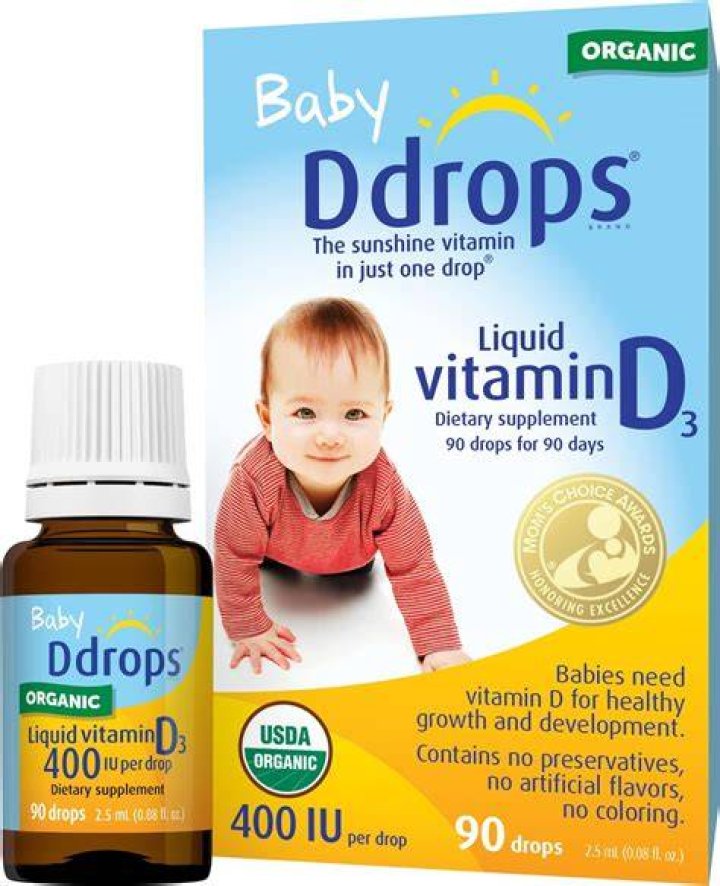
Vitamin D. The American Academy of Pediatrics recommends that all babies receive routine vitamin D supplementation (400 IU per day) due to decreased sunlight exposure and an increase in rickets. The babies who do need these supplements need them due to a lack of sufficient sunlight.
One may also ask, what happens if I forget to give my baby vitamin D drops? A: You should give the drops once a day, every day. But, if you forget one day, it is all right. The vitamin D is stored in the baby and there will be enough to make up for the occasional missed day.
Moreover, how do you give a baby vitamin D drops?
Guidance to administer the drops states: “Place one drop daily onto mother's nipple or on a clean surface, such as a washed finger and allow the baby to suck for at least 30 seconds. “One drop can also be mixed daily with food or drink.”
How many mL of vitamin D should I give my baby?
Always read the label of the vitamin D supplement carefully to determine how much liquid is needed to give your infant the correct dose of vitamin D. Remember, some supplements require just 1 drop for each 400 unit dose; others require 1 mL for each 400 units. Use the right dropper.
Related Question Answers
Can Mom take vitamin D instead of baby?
No. Breast milk alone does not provide infants with an adequate amount of vitamin D, even if mothers are taking vitamins containing vitamin D. Shortly after birth, most infants will need an additional source of vitamin D.Does Vitamin D Help Babies Sleep?
Normally between three and nine months, babies should spend 60 or 70 percent of their time sleeping and taking naps for between one and five hours during the day time. Since 2005, babies have been given extra vitamin D in clinics and this has helped to reduce vitamin D deficiency in babies.What are the symptoms of vitamin D deficiency in babies?
A state of deficiency occurs months before rickets is obvious on physical examination, and the deficiency state may also present with hypocalcemic seizures6, growth failure, lethargy, irritability, and a predisposition to respiratory infections during infancy7.Can infants get too much vitamin D?
Babies May Get Too Much Vitamin D From Droppers. Excessive vitamin D can cause nausea and vomiting, loss of appetite, excessive thirst, frequent urination, constipation, abdominal pain, muscle weakness, muscle and joint aches, confusion, and fatigue and even cause serious damage to kidneys, the FDA says.Does vitamin D help babies gain weight?
High dose vitamin D supplements improve weight gain and the development of language and motor skills in malnourished children, according to a new study.Can you mix baby vitamins with milk?
If your baby won't take the vitamins from the dropper, mix them with a small amount of formula or expressed milk in a bottle. If your baby spits up or vomits with a feeding, you don't need to give another dose of the vitamins.Can I put vitamin D drops in breast milk?
As an alternative, women can take vitamin D supplements themselves – typically 4,000 to 6,000 IU daily – to give babies enough in breast milk so that drops aren't needed. The research team surveyed 184 breastfeeding mothers, including 44 mothers who also gave their babies formula in addition to breast milk.How long does it take to increase vitamin D?
Have your doctor measure your blood levels of 25(OH)D. If you're low, take 5000 IU daily and get your level rechecked in three to four months. Once you're at a good level, maintain at 2,000 IU daily.Can you give a baby vitamin C?
Vitamin supplements containing vitamins A and C are recommended for babies and children aged 6 months to 5 years old, unless they're getting more than 500ml (about a pint) of infant formula a day.Is vitamin d3 the same as vitamin D?
The term "Vitamin D" now refers to several different forms. The two forms important in humans are : ergocalciferol (vitamin D2) and cholecalciferol (vitamin D3). Vitamin D2 is a synthetic form (man made) and Vitamin D3 is the internal form that we make.Can you put vitamin D drops in water?
Vitamin D is a fat-soluble vitamin, meaning that it does not dissolve in water and is absorbed best in your bloodstream when paired with high-fat foods. For this reason, it's recommended to take vitamin D supplements with a meal to enhance absorption.How much vitamin D does a nursing mother need?
An "adequate" intake for nursing mothers is not the 400 IU/d the IOM recommends, but is instead in the range of 5,000-6,000 IU/d, taken daily. If they get that much, they will meet not only their own needs, but their infant's as well. Everyone seems to agree that vitamin D is important throughout life.Do vitamin D drops make baby fussy?
Many parents are surprised to discover their health care providers recommending vitamin drops for their nursing babies. Vitamin D is one vitamin that your breastfed baby may need. Sometimes, however, these herbs can cause increased fussiness in a breastfed baby.How early can babies start teething?
Teething refers to the process of new teeth rising or erupting through the gums. Teething can begin in infants as young as 2 months of age, even though the first tooth usually does not appear until about 6 months of age. Some dentists have noted a family pattern of "early," "average," or "late" teethers.How do you use D drops?
drop onto mother's nipple or a pacifier and allow baby to suck for half a minute. clean surface, then licked off the clean surface rather than dropped directly into the baby's mouth. This allows the eurodropper to not come in contact with the baby (keeping it free of contamination).Do I need to give my baby vitamins?
Baby vitamins. Once your baby is six months old, and up until they are five years, daily vitamin A, C and D supplements are recommended (unless they're having 500ml or more of first infant formula each day). When you buy your baby vitamin supplements, make sure you read the label to check they are age appropriate.What happens if I don't give my breastfed baby vitamin D?
Children who are severely deficient in vitamin D can develop rickets, a disorder in which the bones weaken which can lead to fractures and skeletal deformities.How much sunlight does a baby need?
Give your baby about 10 minutes of direct sunlight every day. Because excessive exposure to sunlight is discouraged, it is important to protect your child from it while still ensuring they get just the amount they need.Why is vitamin D not in breastmilk?
It is important to note that a mother's milk may not lack vitamin D because she, herself, does not have enough in her body. Supplementing the baby takes care of his needs, but does not address the deficiency in the mother, which may lead to long-term, chronic compromises in her health. 
 Daniel Rodriguez