How do you set up a trust in a will?
 William Jenkins
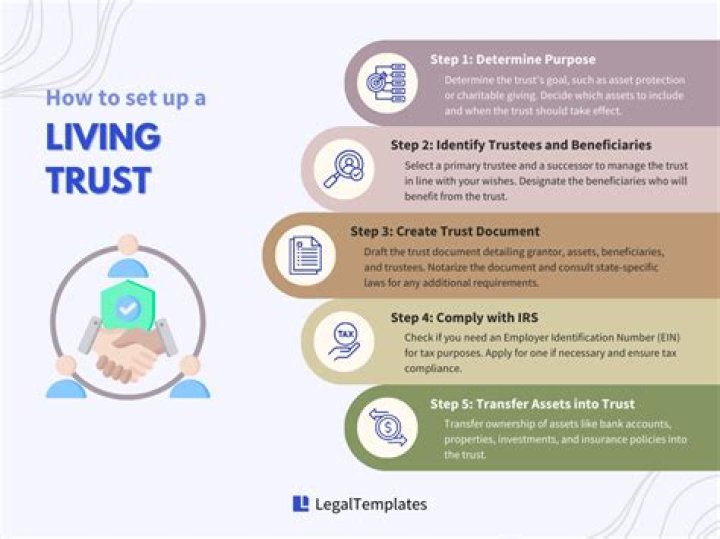
- Creating the Trust Agreement. The grantor creates a trust agreement, which is a legal document that designates the grantor, the trustee, and the beneficiaries, and outlines how the trust assets are to be managed and distributed.
- Funding the Trust.
.
Accordingly, why would a person want to set up a trust?
Trusts can help pass and preserve wealth efficiently and privately. Trusts can help reduce estate taxes for married couples. Gain control over distribution of your assets by using trusts. With a trust, you can ensure that your retirement assets are distributed as you've planned.
Also, how do you create a trust in a will? For a testamentary trust to be recognized as valid, the will must be valid.
- Create a valid will.
- Convey the necessary intent in your will to create a trust.
- Fund the trust with trust property.
- Name at least one beneficiary of the trust.
- Include a valid trust purpose.
Also to know is, who should set up a trust?
A trustee is a bank, attorney, or other entity set up for this purpose. Since the assets are no longer yours, you don't have to pay income tax on any money made from the assets. Also, with proper planning, the assets can be exempt from estate and gift taxes.
What are the disadvantages of a trust?
The Disadvantages of a Living Trust
- Characteristics of a Trust. A living trust allows someone to transfer legal ownership of assets to a trustee.
- Expense. One of the primary drawbacks to using a trust is the cost necessary to establish it.
- More Details. Trusts are often much more complex to draft compared to wills.
- Lack of Tax Advantages.
- Inconvenience.
Related Question Answers
What is the main purpose of a trust?
A trust is traditionally used for minimizing estate taxes and can offer other benefits as part of a well-crafted estate plan. A trust is a fiduciary arrangement that allows a third party, or trustee, to hold assets on behalf of a beneficiary or beneficiaries.How much money is usually in a trust fund?
Less than 2 percent of the U.S. population receives a trust fund, usually as a means of inheriting large sums of money from wealthy parents, according to the Survey of Consumer Finances. The median amount is about $285,000 (the average was $4,062,918) — enough to make a major, lasting impact.Is there a yearly fee for a trust?
Typically, professional trustees, such as banks, trust companies, and some law firms, charge between 1.0% and 1.5% of trust assets per year, depending in part on the size of the trust. A trust holding $200,000 and paying a fee of 1.5% would pay an annual fee of $3,000, which may or may not cover the trustee's costs.What is the benefit of a trust?
Among the chief advantages of trusts, they let you: Put conditions on how and when your assets are distributed after you die; Reduce estate and gift taxes; Distribute assets to heirs efficiently without the cost, delay and publicity of probate court.How much money do you need to set up a trust?
For a bare-bones trust fund, you only need to fill out a few pages of legal documentation and pay a fee to a bank that offers trust accounts. The cheapest accounts require just a couple hundred dollars in fees and less than $100 as an initial deposit.What it means to trust?
What does trust mean? Trusting someone means that you think they are reliable, you have confidence in them and you feel safe with them physically and emotionally. Trust is something that two people in a relationship can build together when they decide to trust each other.What is better a will or a trust?
A living trust is more expensive to set up than a typical will because it must be actively managed after it is created. Most importantly, however, a living trust is useless unless it is funded. A living trust only can control those assets that have been placed into it.Do I need a lawyer to set up a trust?
A trust can be fairly easy to set up, so a lawyer is not always necessary. However, a person with a large or complex estate or a unique situation may want to consult with an estate planning attorney for help with setting up a trust.Should you put life insurance in a trust?
In most cases, it makes better sense to name your beneficiaries individually on life insurance policies versus naming a trust as beneficiary. Trusts are not considered individuals; therefore, life insurance proceeds paid to trusts are generally subjected to estate tax.How long does it take to set up a trust?
about 2 to 4 weeks
How do you prepare a simple will?
10 Steps to Writing a Will- Decide if you want to get help or use a do-it-yourself software program.
- Select your beneficiaries.
- Choose the executor for your will.
- Pick a guardian for your kids.
- Be specific about who gets what.
- Be realistic about who gets what.
- If there's more you want to say, attach a letter to the will.
What is the purpose of a family trust?
The term family trust refers to a discretionary trust set up to hold a family's assets or to conduct a family business. Generally, they are established for asset protection or tax purposes.How do you withdraw money from a trust fund?
How Can I Get My Money Out of a Trust?- Create a Revocable Trust. There are revocable and irrevocable living trusts.
- List Your Rights. Spell out your right to withdraw money in the trust documents.
- Name Yourself a Trustee. Put the name of the trust, with yourself as trustee, on the ownership documents.
- Transfer Your Assets.
- Appoint a Successor.
Why would you put your house in a trust?
The main reason individuals put their home in a living trust is to avoid the costly and lengthy probate process at death. Since you can access the assets in the trust at any time, a revocable trust does not provide asset protection from creditors or remove the home from your taxable estate at death.Are trusts a good idea?
Trusts can still be useful for people to protect and manage assets for relatives who cannot make decisions for themselves due to their youth or mental disabilities. But their main use is for the very wealthy to keep estates intact from generation to generation.Does a trust override a beneficiary?
A trust is a legal device by which property is distributed to beneficiaries named in the trust. Generally, a beneficiary designation will override the trust provisions. There are situations, however, in which the beneficiary designation will fail and the proceeds of the account will pass under the terms of the trust.What are the pros and cons of a trust?
The Pros and Cons of Revocable Living Trusts- An increased interest in estate planning has contributed to a rise in popularity of revocable living trusts.
- It lets your estate avoid probate.
- It lets you avoid “ancillary” probate in another state.
- It protects you in the event you become incapacitated.
- It offers no tax benefits.
- It lacks asset protection.
What should I include in my will?
Ten Things To Include In Your Will- Name a personal representative or executor.
- Name beneficiaries to get specific property.
- Specify alternate beneficiaries.
- Name someone to take all remaining property.
- Give directions on dividing personal assets.
- Give directions for allocating business assets.
- Specify how debts, expenses, and taxes should be paid.